
Most enterprise software is built English-first, with Arabic support bolted on later — if it exists at all. For businesses operating across the GCC, that’s not a minor inconvenience. It’s a daily friction point that touches every department, from finance to HR to customer-facing operations.
Why “Translated” Isn’t the Same as Bilingual ERP
A lot of ERP vendors will tell you their system “supports Arabic.” What they usually mean is that some menu labels have been translated. The underlying architecture — right-to-left text handling, dual-calendar support (Hijri and Gregorian), Arabic numeral formatting, and right-aligned reports — often isn’t there at all. The result is a system that looks Arabic on the surface but behaves like a poorly localized English product underneath.
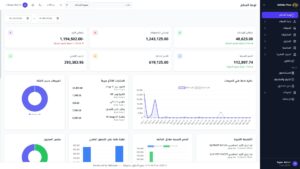
True bilingual support means:
- Full RTL (right-to-left) layout, not just translated text sitting inside a left-to-right interface
- Dual-calendar support, since many GCC businesses operate across both Hijri and Gregorian dates for compliance, payroll, and reporting
- Consistent terminology, especially in finance and HR modules where a mistranslated term can create real compliance risk
- Equal depth in both languages — an Arabic-speaking employee shouldn’t get a stripped-down experience compared to an English-speaking colleague using the same system
Why this matters more in ERP than almost any other software category
CRM and marketing tools can survive with lighter localization — a translated interface is usually enough. ERP is different. It’s the system of record for your entire business: invoicing, payroll, inventory, compliance reporting. When the language layer is shallow, errors compound. A poorly translated field label in a financial report isn’t just annoying — it can lead to genuine reporting mistakes.
For businesses with a mixed-language workforce — common across Kuwait, the wider GCC, and increasingly across the region as digital transformation accelerates — this isn’t a nice-to-have. It’s operational infrastructure.
What to ask any ERP vendor
Before committing to a platform, it’s worth asking directly:
- Was Arabic support built into the core architecture, or added as a translation layer afterward?
- Does the system support full RTL layouts across every module, not just the dashboard?
- Can reports, invoices, and exports be generated natively in Arabic — not just the interface?
- Is ongoing support available in both languages?
Where this leaves most businesses
Many companies end up compromising — either accepting a shallow Arabic layer on an international platform, or building around a system that was never designed with their actual language needs in mind. Neither is a real solution.
At Sellabyte, this is exactly the gap Infinite Flow was built to close — a fully bilingual ERP, architected for Arabic and English from the ground up, not translated after the fact.